
Operating System
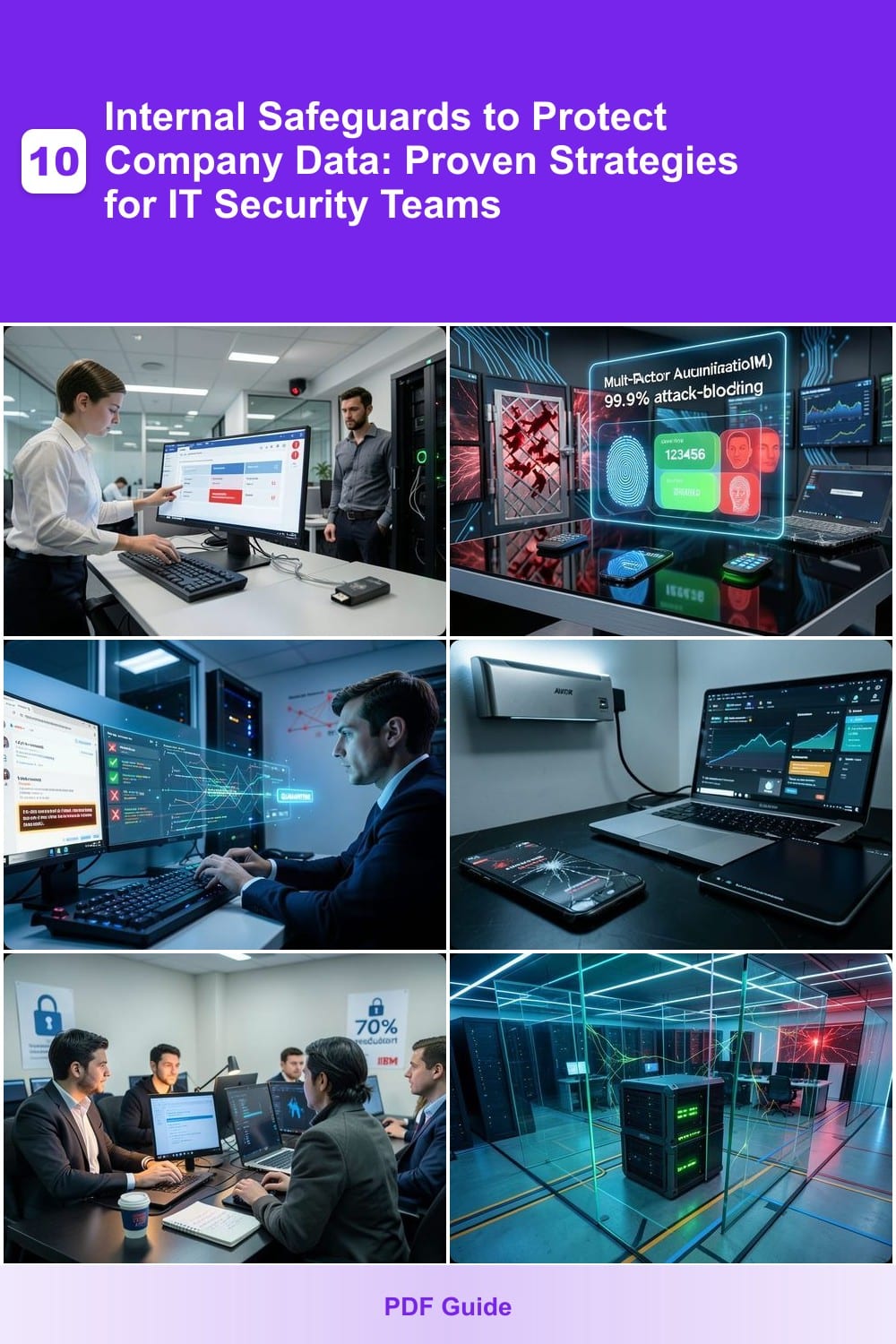
Data breaches cost companies billions annually, but most cyber threats originate internally. These 10 internal safeguards provide IT security teams with actionable strategies to fortify company data against both accidental leaks and malicious attacks—without relying solely on external firewalls.
Role-Based Access Control Implementation

Imagine a company where an intern accidentally leaks customer records—or worse, a disgruntled employee exfiltrates sensitive data. Role-Based Access Control (RBAC) stops these scenarios before they start by ensuring employees only access what they need to do their jobs, nothing more.
With RBAC, you define granular permissions tied to roles (e.g., "HR Manager" vs. "Finance Clerk") rather than individual users. Tools like Microsoft Azure AD or Okta automate enforcement, while just-in-time (JIT) access further limits exposure by revoking permissions after use. For enterprises with sprawling departments, this reduces insider threats by up to 80% while keeping workflows fluid.
This is your go-to safeguard for companies with multi-tiered structures—like healthcare providers managing patient data or legal firms handling case files. The key? Regular audits to ensure roles stay aligned with actual job functions. 🌟
Multi-Factor Authentication for Internal Systems

Credential theft is the #1 way attackers breach internal systems—yet most companies still rely on passwords alone. Multi-Factor Authentication (MFA) adds an extra defense layer that blocks 99.9% of automated attacks, including brute-force and credential-stuffing attempts, by requiring a second verification step beyond passwords.
Modern MFA solutions integrate seamlessly with VPNs, email platforms (like Microsoft 365 or Google Workspace), and cloud apps (Salesforce, Slack). Options range from biometric scans (fingerprint/Face ID) to hardware tokens (YubiKey) or time-based one-time passwords (TOTP). The best systems—like Duo Security or Okta Verify—offer zero-configuration setup for employees, reducing adoption friction while maintaining enterprise-grade security.
This safeguard is non-negotiable for remote teams or hybrid workforces, where traditional perimeter security (like firewalls) no longer protects against stolen credentials. Even small businesses benefit from MFA’s cost-effective risk reduction. 💻
Automated Data Loss Prevention Policies

Forget hoping employees "won't accidentally" email sensitive data—automated Data Loss Prevention (DLP) policies actively block leaks before they happen. These systems scan files in real-time, flagging anything matching your predefined rules (like HIPAA-protected health records or credit card numbers), and can even revoke access to files already shared externally.
Modern DLP solutions integrate with Microsoft 365, Google Workspace, and cloud storage platforms, offering features like content-aware scanning (identifying patterns in unstructured data) and policy-based encryption for high-risk files. For example, Symantec DLP can detect when a spreadsheet containing Social Security numbers is being uploaded to Dropbox and automatically trigger a quarantine—no manual review needed.
This is non-negotiable for healthcare providers handling patient data or financial firms processing client transactions. Even small businesses storing customer records should prioritize DLP to avoid costly compliance violations. ⚡
Endpoint Detection and Response Deployment

When employees connect personal devices to your network, traditional antivirus simply isn’t enough to stop modern threats like fileless malware or zero-day exploits. Endpoint Detection and Response (EDR) fills this gap by providing real-time behavioral analysis and automated containment—blocking attacks before they spread laterally across your infrastructure.
Solutions like CrowdStrike Falcon or Microsoft Defender for Endpoint use AI-driven threat hunting to detect anomalies, such as unusual process injections or unauthorized data transfers, with sub-second response times. Unlike legacy antivirus, EDR doesn’t rely on signature matching—it stops threats based on suspicious behavior patterns, even on unmanaged devices. For BYOD environments, this means protecting company data without restricting employee flexibility.
Organizations with hybrid workforces or high-value intellectual property—like tech startups or legal firms—see the biggest ROI from EDR. The key is deploying it alongside your existing security stack, not as a replacement. 💪
Regular Security Awareness Training Programs

While firewalls and encryption lock down your systems, the weakest link often sits right in front of the screen—your employees. Security awareness training isn’t just another compliance checkbox; it’s a proven 70% reduction in breach incidents when implemented consistently, according to IBM’s Security Intelligence reports.
Modern programs go beyond dry manuals with interactive phishing simulations, real-world case studies, and gamified learning to reinforce habits like spotting CEO fraud emails or suspicious login prompts. Platforms like KnowBe4 or SANS Security Awareness deliver tailored modules for roles from executives to interns, with refresher courses every 3-6 months to combat complacency.
This safeguard shines brightest for SMBs with limited IT budgets—where human error accounts for 95% of breaches—and industries like finance or healthcare where regulatory fines hit hardest. Start with a quarterly training cycle and track click-through rates on simulated phishing tests to measure progress. 💡
Network Segmentation for Critical Data

What if a single breach could be contained before it spreads across your entire network? Network segmentation acts like digital walls, isolating critical systems from the rest of your corporate network—preventing lateral movement that turns small incidents into full-blown disasters.
This strategy divides your network into isolated zones (like R&D, finance, or manufacturing systems) with micro-perimeter firewalls between them. For example, a VLAN-based segmentation setup ensures that even if a hacker breaches your guest Wi-Fi, they can’t access your proprietary design files. Tools like Cisco’s SD-Access or VMware NSX automate this process, letting you define policies based on user roles, device types, or even time of day. The result? Zero-trust principles in action, where every segment is treated as untrusted by default.
Manufacturing firms protecting trade secrets or research labs safeguarding patent-pending algorithms see the biggest ROI here. Even a mid-sized aerospace supplier using segmentation cut breach cleanup time by 60% after a supplier portal was compromised. 💪
Encrypted Communication Channels Setup

When trade secrets or proprietary algorithms hang in the balance, end-to-end encryption isn’t just a feature—it’s a necessity. Imagine a scenario where a single misplaced email or unsecured video call leaks your company’s next-gen AI model to competitors. With encrypted communication channels, that risk vanishes.
Platforms like Signal for Business or Microsoft Teams with E5 compliance offer AES-256 encryption for messages, calls, and files by default. Add secure file-sharing tools like CipherSend for large documents, and you’ve created a zero-trust communication environment where even metadata stays private. For high-stakes industries, hardware-backed keys (like YubiKey integration) add an extra layer of protection against quantum computing threats.
This setup is non-negotiable for R&D firms, biotech companies, and defense contractors where intellectual property defines market dominance. Even remote teams benefit from the peace of mind that comes with knowing their discussions stay confidential. 🌟
Automated Patch Management System

Cybercriminals exploit unpatched software like a hungry wolf—60% of breaches start this way. An automated patch management system flips the script by eliminating this low-hanging fruit before attackers can strike.
Modern solutions like ManageEngine Patch Manager Plus or SolarWinds Service Desk scan your entire network for outdated software, prioritize critical fixes, and deploy them without manual intervention. They handle everything from Windows updates to third-party apps, even testing patches in staging environments first. The best systems also integrate with your SIEM tools for real-time threat correlation.
This is the quiet hero of IT security—no flashy dashboards, just silent, relentless protection. Perfect for mid-sized businesses where IT teams are stretched thin but can’t afford vulnerabilities. ⚡
Insider Threat Monitoring Solutions

Not all threats come from outside your network—sometimes, the biggest risks hide in plain sight: your own employees. Insider threat monitoring solutions like Darktrace or Exabeam use AI-driven behavioral analytics to detect anomalies like late-night data access, unusual file transfers, or sudden privilege escalations before they become breaches.
These tools analyze patterns such as unexpected login locations, mass downloads of sensitive files, or communication with external domains—red flags that traditional security tools miss. For industries like finance, healthcare, or tech, where turnover is high and proprietary data is valuable, these systems provide real-time alerts and forensic insights to investigate suspicious activity without relying on guesswork.
Perfect for organizations where employee dissatisfaction or negligence could lead to catastrophic leaks, these solutions act as a proactive shield against the most overlooked yet dangerous threats. 💻
Disaster Recovery and Backup Validation

Your backup strategy might be solid—but if you’ve never tested restoring critical files, you’re flying blind. Disaster recovery validation ensures backups aren’t just stored but usable when ransomware strikes or hardware fails. The key? Automated tools like Veeam or Commvault that simulate attacks, verify restore times (under 15 minutes for critical data), and flag corrupted backups before they’re needed.
Most companies assume backups work until they don’t. Proactive validation catches silent failures—like a backup that looks intact but fails to restore due to encryption mismatches or corrupted indexes. For example, AWS Backup now includes built-in validation checks, while on-premises solutions like Dell EMC NetWorker offer granular recovery testing for specific file types. The goal? Zero surprises during a crisis.
This isn’t just for Fortune 500s—small firms with customer databases or proprietary designs need it most. Start with quarterly validation drills for your most sensitive data. 💻